The Titanic Tsunami and the Missing Boat
In December 1997, one of history’s great blockbuster movies sailed onto theater screens worldwide. I remember the palpable energy surrounding this movie’s release. It featured a pair of talented actors, Leonardo DiCaprio and Kate Winslet, legendary director James Cameron, and the musical genius of James Horner and Celine Dion. Titanic was a massive hit at the box office, grossing $1.84 billion over its nearly year-long first run. It was one of those rare hits that theater owners dream of—the kind that fill seats night after night, keep the popcorn and soda flowing, and that bring people back to see it again multiple times.
AMC Theaters was one of the primary beneficiaries of the Titanic tsunami that swept the world. At the time, AMC operated 228 theaters with a total of 2,439 screens. Many of these screens featured Titanic, bringing a rising tide of revenue for their theater owners. But AMC Six theater, located at El Con Mall in Tucson, Arizona, wasn’t one of them. On September 1, 1997, 109 days before Titanic premiered in the US, the AMC theater at El Con closed its doors for good. It missed the boat on one of the highest-grossing films in history by a little over three months.
Local Roots: The Weiner Brothers and TM Theaters
The AMC Six Theater in Tucson was originally known as El Con Six Theater, built in the late 1970s by TM Theaters of Tucson. In September 1978, this home-grown theater company, owned by Jeffrey and Merton Weiner, acquired the rights to manage the new 6-screen indoor theater being constructed at El Con Mall, fending off competing bids from the number one and two theater chains in the United States. Collectively, TM theaters managed 19 screens in Tucson, the most of any Arizona-based company at the time. To manage the booking of films for their theaters, the Weiners contracted with American Multi-Cinema (AMC), the largest theater chain in the United States.1
The Golden Era of El Con Mall
When the El Con Six theater opened on August 15, 1979, El Con Mall was entering its golden era. Seven months earlier, the mall completed a $6 million renovation, connecting the original north-south wing and the newer east-west wing all under one air-conditioned roof. Thanks to these improvements, El Con became the largest climate-controlled shopping center in the Southwest, boasting 1.35 million square feet of retail space. Though the theater didn’t connect to the mall, it was nestled between JCPenney and the mall’s north wing near Steinfeld’s department store. Here is the Tucson Citizen’s description of the theater 6 days before the grand opening:
The El Con 6 will be the first six-theater complex in the state. With total seating capacity for 1800, the largest of the theaters has 500 seats, the 400, 300 and three theaters with 200 seats. The decor is in blues and browns, with the lobby featuring a 56-foot long mural of popular movie stars, painted by David Fitzsimmons.2
For eighteen years, the El Con Six theater was a meeting place where Tucsonans experienced the magic of cinema.
The Iceberg Moment
By 1997, the renovations of the late 70s were a distant memory. El Con was run-down and facing stiff competition from its nearby competitor, Park Mall, just 3 miles east on Broadway Boulevard. On September 1, 1997, the AMC Six Theater ended its nearly two-decade-long run at the mall. Two days later, Foster Kivel, part-owner of the mall, announced El Con was replacing the 6-screen theater with a new 20-screen megaplex. To make room for the new theater, the El Con Six and a substantial portion of El Con’s original north wing would be torn down.
In hindsight, the demolition of the El Con Six was the mall’s iceberg moment. While the ship didn’t sink until 2011, the 1997 razing of the theater and North Wing sparked a chain reaction that ultimately doomed the mall. As the frigid waters of the North Atlantic spilled over the Titanic’s bulkheads into its 16 watertight compartments, more and more sections of the mall were torn down, leaving behind a disjointed collection of big box stores where a community once gathered. Fourteen years later, El Con’s owners opted to tear down the 51-year-old enclosed mall and convert it to a retail power center. Many more factors contributed to El Con’s demise, but the razing of the El Con Six theater is an emblematic event that captures the moment Tucson’s first shopping mall ran aground and began to founder.
A Rite of Passage: Memories of the 1980s
Going to the El Con 6 Theater with my brother and friends was something of a rite of passage in the 1980s. It was one of the first quasi-adult activities we were allowed to do without supervision. We’d spend the whole day at the mall, playing games at the arcade, visiting the music store, and grabbing an Orange Julius or, if we pooled our money, an extra-large pepperoni pizza at Round Table Pizza. The best mall outings ended with a movie at El Con Six Theater. Here’s a list of 10 of the more memorable films I saw there with my brother and friends:
- Aliens (7/86)
- Hoosiers (11/86)
- Platoon (12/86)
- The Princess Bride (7/87)
- Robocop (7/87)
- Return to Snowy River (4/88)
- Big (6/88)
- Die Hard (7/88)
- Who Framed Roger Rabbit (9/88)
- Batman (6/89)
Film as a Compass for Deeper Waters
If I had to list my favorite movies of all time, none of these films would make the cut. With the exception of the Star Wars Trilogy, few of the movies I saw at the El Con Six Theater were particularly life changing. What made this particular theater so memorable to me was that it was there that I first discovered that films are more than just entertainment: They teach you about life. As a teenager grappling with existential questions for the first time, I discovered, almost by accident, that film was an effective compass for navigating life’s deeper waters.
Admittedly, many of the movies I watched at El Con Six during my adolescent years were merely entertaining, but some taught me lessons that shaped the person I am today. They challenged my beliefs, inspired my imagination, and introduced me to new ways of living that I hadn’t yet considered. In that way, many of the movies I saw at El Con Six had a lasting impact on my life.
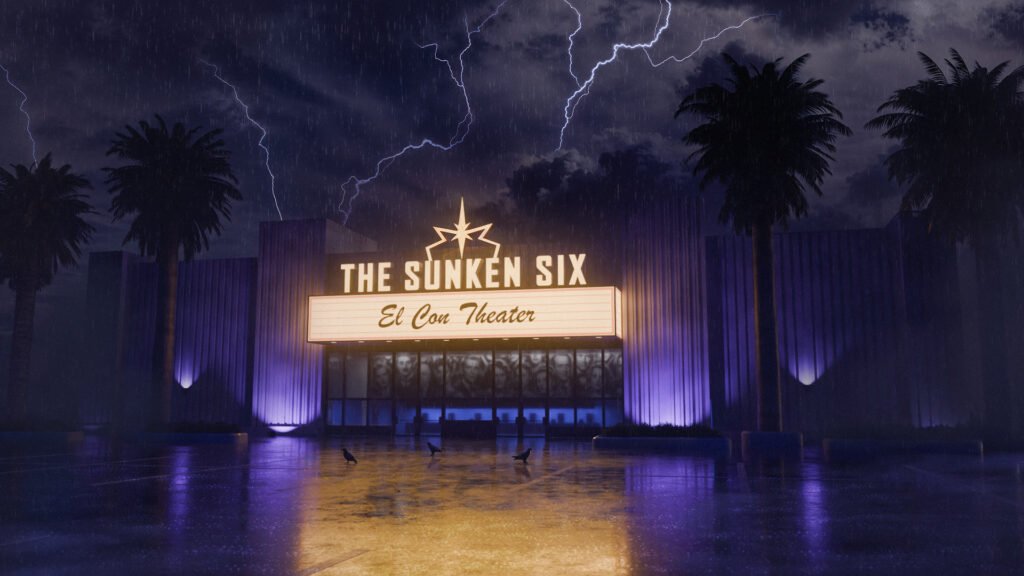
For me, the El Con Six Theater was more than a place to see movies—it was the engine that drove me to discover film as a tool for teaching important life lessons. That engine was scuttled in 1997, but I’m resurrecting it here with The Sunken Six Theater, a new blog series at the Dead Mall Underground.
Each month, I’ll choose a movie for a series post, mine it for analog wisdom, and apply its lessons to life in the 21st Century. The movies will run the gamut from black and white classics to modern documentaries. Some films will have screened at the El Con Six, and others will not. One thing all the Sunken Six films will have in common is a message that makes life in the Digital Age more meaningful.
There’s a powerful scene at the end of James Cameron’s film where a camera glides through the frigid depths of the North Atlantic until it reaches Titanic’s wreckage. As the camera moves past the ship’s wheelhouse, the barnacle-encrusted remains of the side deck morph—filling with light, and the ship is magically restored to its original condition. The legendary Titanic, and all who died aboard it, come to life again before our very eyes.
The Sunken Six series is my attempt at that same morph. Through this series, I will revive the storytelling engine of the former El Con Six to share the lessons I’ve learned through film over the years. The first screening begins next month.
I’ll save a seat for you.
Footnotes
1Keating, M. (1978, September 27). TM theaters buys 6-screen el con complex. Tucson Citizen, p. 1.
26-in-1 theater: el con 6 opens wednesday. (1979, August 9). Tucson Citizen, p. 4.